Ras Al Khaimah Winter Weekend: Mountains, Forts and Pearls

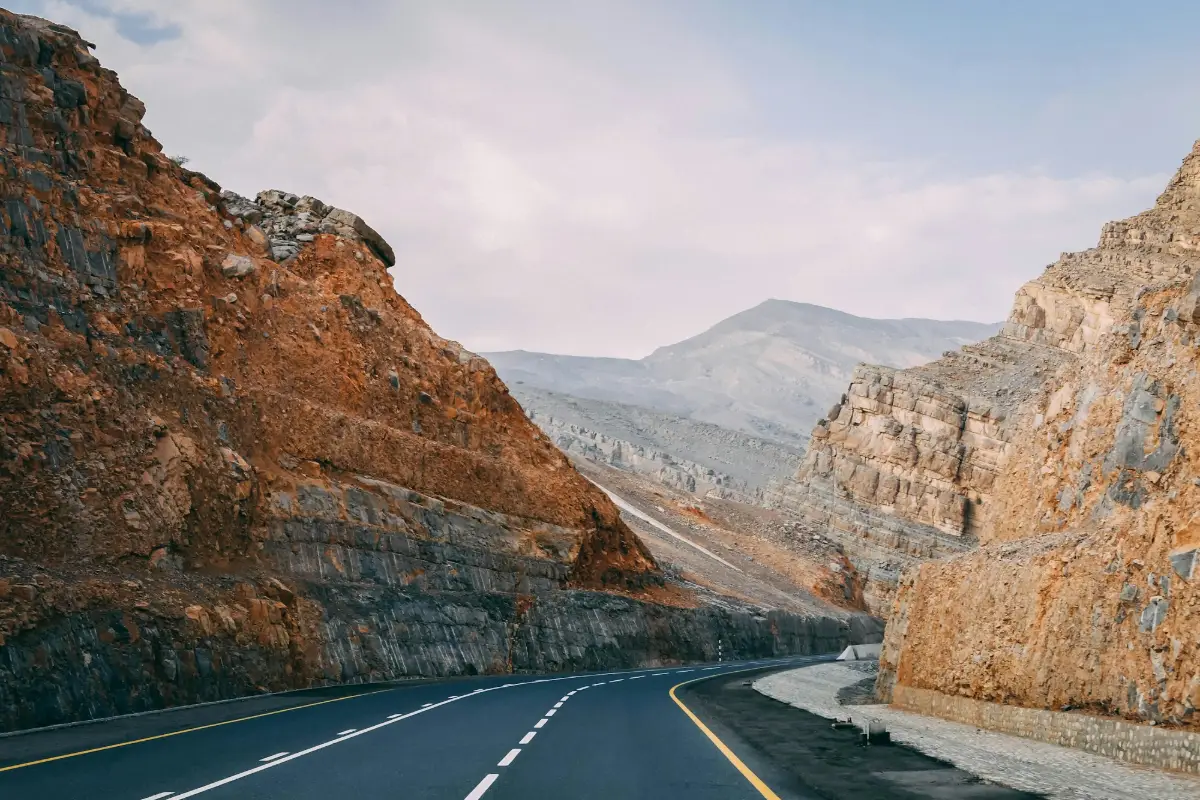
The road climbs in long switchbacks, and somewhere past the halfway point you notice the air conditioning is no longer needed. By the time you pull into the car park near the top of Jebel Jais, the windows are down and someone in the back seat is asking for the jumper they laughed at you for packing. Below, the Hajar Mountains fold away in grey and copper ridges, one behind the other, until they fade into haze. The wind smells of dry rock. It is quiet in a way the coast never is. Somewhere across the valley, the longest zipline in the world is sending its next rider out over the drop, and a small cheer drifts up from the people waiting their turn. This is Ras Al Khaimah in the cool season: mountain mornings, afternoons by the sea, and evenings that ask for a fire, not a fan.
Ras Al Khaimah has beaches, but it also has the highest peak in the country, a hill fort on the UNESCO tentative list, the UAE's pearl farming story and a stretch of red desert. This guide turns all of that into one easy weekend, with what each stop costs, when it opens, and the small timing decisions that make the difference.
Jebel Jais: start high, start early
Begin at the top. According to Visit Ras Al Khaimah, Jebel Jais rises 1,934 metres above sea level and is the highest mountain peak in the UAE. The tourism board says it runs around 10 degrees cooler than the rest of the emirate, and it recommends October to April as the best time to go. Up here, its own weather guide adds, below freezing temperatures and even snow in winter are not unheard of.
The easiest first stop is the Jais Viewing Deck Park, which the mountain's operators describe as the highest viewing deck park in the country, with picnic spots, telescopes and a clear line to the sunset. There is a minimal entry fee. Bring a flask of karak, find a ledge out of the wind and give the view a proper half hour. It changes as the sun moves.
Then there is the zipline. The official Jebel Jais adventure page lists Jais Flight at 2.83 kilometres long, launching from 1,680 metres above sea level, at speeds of up to 160 km per hour. Guinness World Records still lists it as the longest zip wire, at 2,831.88 metres, set on 31 January 2018. Tickets start from AED 325 per person on the official site. Riders must be at least 12 years old, at least 122 cm tall and weigh between 40 and 120 kg, and the operator strongly recommends booking ahead.
Too much for some of the group? The Jais Sky Tour is the gentler option: six ziplines and a sky bridge across about 5 kilometres in total, at up to 60 km per hour, over roughly two hours, and the operators pitch it as family friendly. One honest caution. The Jais Sledder toboggan ride was listed as temporarily closed when we checked on 23 November, so do not build a day around it.
Tip: plan the mountain for the morning. Book your zipline slot before you leave home, and pack a warm layer for everyone, even if the coast was 30 degrees the day before.
Dhayah Fort and the old town: history in an afternoon
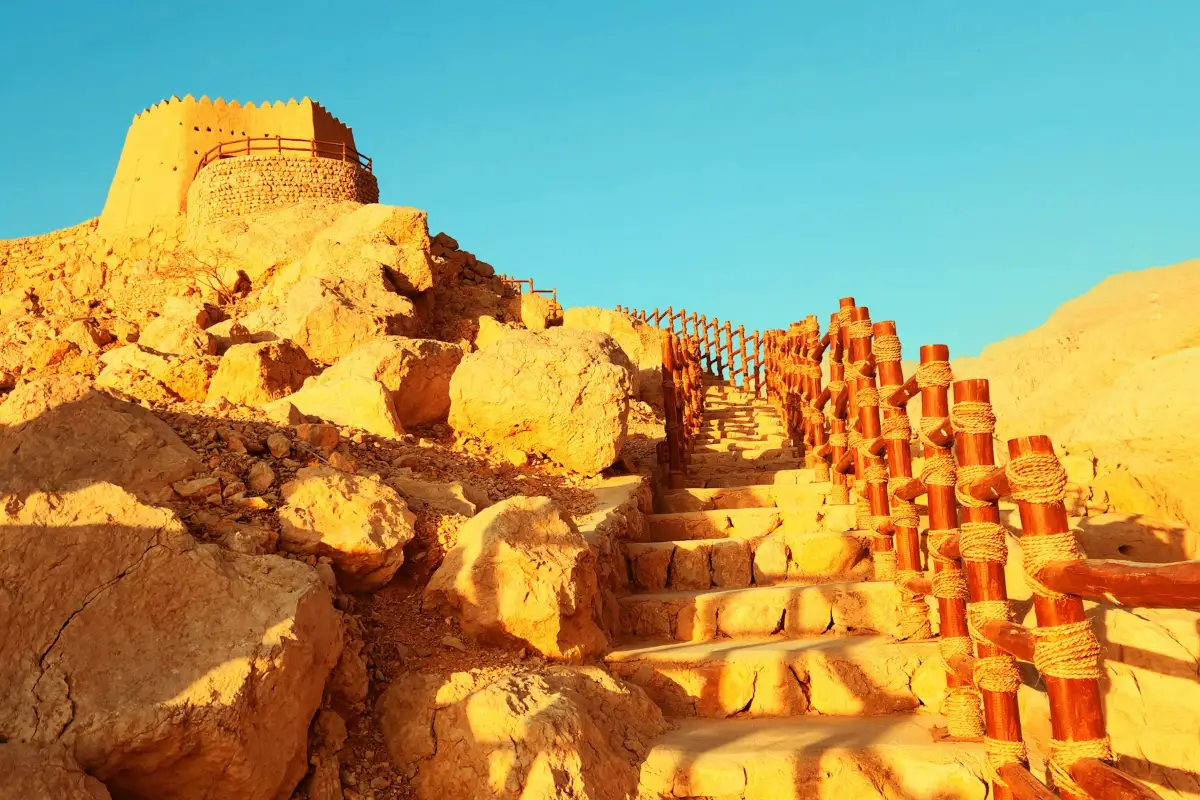
Come down from the mountain for the history. Dhayah Fort sits on a rocky hill, and the tourism board page calls it the only remaining hill fort in the UAE. The fort itself was built in the 19th century, though the site goes back much further, to the Late Bronze Age, and it is on the UNESCO World Heritage Tentative List.
Getting to the top means 239 zigzagging steps. The path is uneven and rocky, and there is no lighting, so this is a daylight visit. Visit Ras Al Khaimah's heritage itinerary puts the climb at about 15 to 20 minutes and lists opening hours of 9am to 5pm, Sunday to Thursday, with the fort closed on Friday and Saturday. That last detail catches weekend visitors out. If your trip runs Friday to Sunday, save the fort for Sunday morning.
The same itinerary covers two more stops. The National Museum of Ras Al Khaimah is housed in an 18th century fort that was once the official residence of the ruling Al Qasimi family. It opens Tuesday to Sunday from 8am to 6pm, closes on Mondays, and entry is AED 5 for adults and AED 2 for children.
Al Jazeera Al Hamra is the quieter, stranger one. The tourism board describes it as the last intact pre oil pearl fishing village in the Arabian Gulf, a town of old houses and lanes now going through a phased restoration. Entry is free, it opens Tuesday to Sunday from 10am to 6pm, and a free one hour guided tour starts at 4pm on Saturdays and Sundays. You walk the lanes, but you do not go inside the buildings.
Tip: Monday is the one day to avoid for heritage, because both the museum and Al Jazeera Al Hamra are closed.
Al Rams: the pearl farm on the water
Pearling made this coast's fortune long before oil. In Al Rams, the emirate's northernmost neighbourhood and once a pearl diving hub, that story is still being told on the water. Suwaidi Pearls is a working pearl farm, founded by Abdulla Rashed Al Suwaidi in honour of his grandfather, a pearl diver. The tourism board's press kit dates it to 2005.
The visit starts with a traditional boat ride through the mangroves and wetlands to a floating farmhouse on a pontoon, where you learn how pearls are cultivated. You can choose to have an oyster opened in front of you, and yes, the children will insist. Lunch depends on the package you pick. Timings vary by package too, so ask when you book, and book ahead, because the farm asks visitors to.
Our House of Pearls Ras Al Khaimah ticket covers the boat ride through the Al Rams mangroves, a guided tour of the floating pearl farm, a live oyster opening, the Pearl Museum, and Arabic tea, coffee and dates at the end.
Tip: ask about lunch when you book. It depends on the package, and knowing in advance saves a hungry afternoon of guessing.
Evening: the red desert
Ras Al Khaimah has red dunes of its own, and the season is right for them. The tourism board's weather guide puts winter highs at about 25 to 30 degrees from December to March, with lows of about 13 to 15 degrees, so evenings in the sand are comfortable rather than draining.
Our Afternoon Desert Safari Ras Al Khaimah picks you up from hotels in the emirate at around 3pm in a shared four wheel drive. You get dune bashing with an experienced driver, sunset from the top of a high dune, then a camp with camel rides, sandboarding, henna and a Tanoura show, with a shawarma station and BBQ dinner. It was AED 249 for adults and AED 189 for children aged 3 to 11 when we checked on 23 November, and children under 3 go free. Two things to know: quad bikes cost extra at the camp, and tickets are non refundable and valid only on the date you book.
If you would rather see the desert from above, our Sunrise Hot Air Balloon Ras Al Khaimah is around an hour in the air at first light, followed by a breakfast buffet and a flight certificate, for guests aged 6 and over. It means a very early alarm.
Tip: if you only have one evening, choose the safari on Saturday and keep Friday night simple. You will be tired after the mountain.
Plan it
When: any weekend from now until March is cool season weather. The end of November still sees coastal highs of around 30 degrees, and January brings rain on two or three days on average, according to the tourism board.
Getting there: the Ras Al Khaimah Tourism Development Authority puts the emirate about 45 minutes' drive from Dubai International Airport. Treat that as approximate, and allow more on a Friday afternoon.
A simple shape: Friday, drive up after lunch and walk Al Jazeera Al Hamra before its 6pm close. Saturday, Jebel Jais in the morning, the desert safari in the afternoon and evening. Sunday, the pearl farm, then Dhayah Fort before 5pm and the drive home.
What it costs: Jais Flight from AED 325 per person on the official site. National Museum AED 5 for adults and AED 2 for children. Al Jazeera Al Hamra free. Desert safari AED 249 for adults and AED 189 for children aged 3 to 11 with us. Book individual activities through The UAE Junction and you earn Cashback Credits on them.
Make it a long weekend: the trip fits neatly into a public holiday break. Our Eid Al Etihad long weekend plan has more ideas, and if you are deciding between dune camps closer to home, read our guide to picking a Dubai desert safari evening.
New Year note: Khaleej Times reports that Ras Al Khaimah's New Year's Eve festival at Jais Festival Ground is free with registration, runs from 4pm on 31 December to 3am, and has fireworks and drone shows over 5 km of coastline, with the main show from 11.50pm to 12.05am. Details are in the Khaleej Times report. Check before you go, as programmes can change.
Back in Dubai: the Global Village Challenge
Home by Sunday night? There is still time for one more thing this week. Our Global Village Challenge gives away two Global Village tickets every week. There is a daily question on the challenge page; register to take part, the week closes on Saturday night, and the winner is announced on Sunday. Full rules are on the challenge page.
FAQ
How high is Jebel Jais?
Jebel Jais rises 1,934 metres above sea level and is the highest mountain peak in the UAE, according to Visit Ras Al Khaimah.
How much does Jais Flight cost and who can ride?
Tickets start from AED 325 per person on the official site. Riders must be at least 12 years old, at least 122 cm tall and weigh between 40 and 120 kg. Booking ahead is strongly recommended.
Is Dhayah Fort open at weekends?
Not on Friday or Saturday. The tourism board lists opening hours of 9am to 5pm from Sunday to Thursday. The climb is 239 uneven steps with no lighting, so go in daylight.
Is Al Jazeera Al Hamra free to visit?
Yes. Entry is free, it opens Tuesday to Sunday from 10am to 6pm, and a free one hour guided tour starts at 4pm on Saturdays and Sundays. It is closed on Mondays.
How cold does Jebel Jais get in winter?
The tourism board says the mountain runs around 10 degrees cooler than the rest of the emirate, and that below freezing temperatures and even snow in winter are not unheard of. Pack a warm layer.
Does the Ras Al Khaimah desert safari include pickup from Dubai?
Our afternoon safari picks up from hotels in Ras Al Khaimah only, at around 3pm. If you are staying in the emirate for the weekend, that is the simplest option.
By Sunday afternoon, the jumper is back in the boot and the car smells faintly of sand. On the drive south, someone will look back at the mountains turning blue in the late light and ask when you are coming again. It is a fair question. The cool season is short, and the quiet up there is worth the drive. If you want the bookings handled, start with the desert evening and build the weekend around it.
More stories you’ll love


Inspired to travel?
Plan your trip with us and earn 2.5% cashback credits on every individual booking.
Get a Free Quote →